

Introduction: Expression Is a Skill That Grows
Children feel deeply long before they know how to express what they feel.
Emotional expression is not something children automatically know how to do. It develops slowly, through experience, relationship, and repeated moments of being understood. When children find ways to express their inner world, emotions move, soften, and organize themselves naturally.
This article explores how emotional expression grows, why it matters so deeply, and how parents can support it gently in everyday life — without pressure, correction, or urgency.

Expression Comes Before Regulation
Before children can regulate emotions, they need space to express them.
Emotional regulation is often misunderstood as the ability to “calm down quickly.” In reality, regulation develops after emotions are allowed to surface, be recognized, and find form. Expression is the bridge between feeling and integration.
When emotions are held inside without a channel, they often emerge through the body or behavior. When expression is welcomed, emotions move toward resolution.
Emotions Live in the Body First
Children experience emotions as physical sensations before they become thoughts or words.
Tight shoulders, fast breathing, clenched hands, restlessness, tears — these are all forms of emotional expression. Young children, especially, communicate through movement, play, sound, and gesture.
Understanding this shifts how we listen. We begin to notice posture, energy, tone, and rhythm, not only language.
Why Expression Sometimes Feels Difficult
Many children hesitate to express emotions because they are still learning whether it is safe to do so.
Children observe carefully:
- How adults respond to strong feelings
- Whether emotions are welcomed or rushed
- Whether certain feelings receive more space than others
When expression is met with calm attention, children learn that emotions are manageable and meaningful.
Creating an Environment That Invites Expression
Emotional expression grows best in environments that feel predictable, attuned, and accepting.
This does not require constant conversation. It requires a tone of curiosity and openness woven into daily life.
Helpful foundations include:
- A calm adult presence
- Familiar routines
- Repeated experiences of being listened to
- Emotional language modeled naturally
The Many Languages of Emotional Expression
Children express emotions in many ways. Words are only one of them.
Play
Play allows children to explore feelings symbolically. Through characters, stories, and scenarios, emotions can be expressed indirectly and safely.
A child who reenacts a school scene or builds and rebuilds a structure is often working through emotional material.
Art and Creativity
Drawing, painting, and crafting give emotions shape and color. Children may not explain what they create — and they don’t need to. The act of creation itself organizes emotion.
Movement
Jumping, spinning, stretching, and rhythmic movement help emotions move through the body. Movement supports regulation and expression simultaneously.
Silence and Proximity
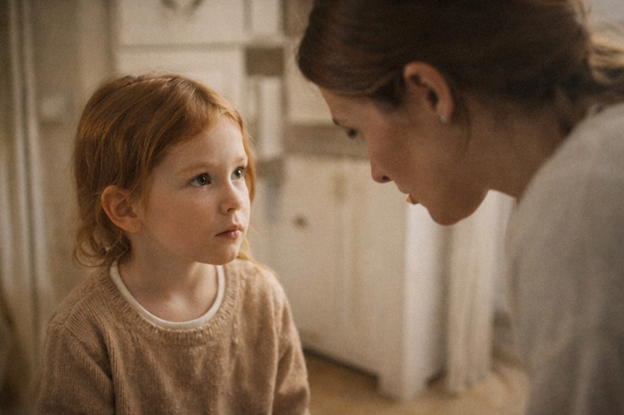
Sometimes expression happens without words or action. Sitting nearby, leaning in, or resting quietly together can communicate emotional truth just as clearly.
The Adult’s Role: Listening Without Directing
Adults support emotional expression by listening more than leading.
Helpful responses include:
- Reflecting what is observed
- Naming emotions gently
- Staying curious rather than corrective
For example:
- “That looked really frustrating.”
- “Something felt disappointing there.”
- “I’m here with you.”
These responses create space without pushing for explanation.
Emotional Language as a Gift
Children learn emotional language by hearing it modeled.
When adults speak openly about their own feelings in age-appropriate ways, children absorb emotional vocabulary naturally. This builds emotional literacy over time.
Simple examples:
- “I felt overwhelmed, so I took a breath.”
- “I felt disappointed, and it passed.”
These moments teach children that emotions are temporary and manageable.
When Emotions Feel Intense
Some emotions arrive with great intensity.
In these moments, containment matters more than conversation. A calm adult presence, steady voice, and physical grounding help the nervous system settle. Expression may come later, once the body feels safer.
Intensity does not mean something is wrong. It often reflects depth of feeling.
Supporting Expression in Everyday Moments
Opportunities for emotional expression appear naturally throughout the day.
Moments such as:
- After school
- During transitions
- Before sleep
- After conflicts
Gentle invitations can open space:
- “What stayed with you today?”
- “Was there a moment that felt big?”
There is no need to resolve everything. Being heard is often enough.
A Sara Soul Perspective
Emotional expression is not a performance.
It does not need to be polished, clear, or logical.
It grows in relationships that feel steady and safe. When children experience their emotions as welcome, they develop trust in their inner world.
Over time, this trust becomes emotional resilience.
Closing: Expression as Emotional Freedom
When children are supported in expressing emotions, something essential happens.
Feelings move instead of getting stuck.
Connection deepens.
Self-understanding grows.
Emotional expression becomes a lifelong resource — one that supports relationships, creativity, and well-being.