
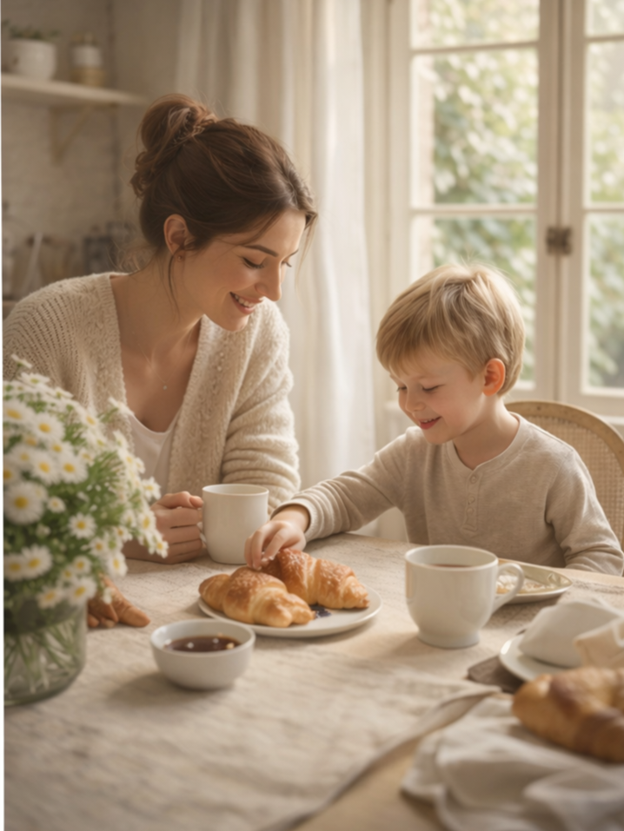

Introduction: Routines as Emotional Ground
Family routines are more than schedules.
They are emotional landscapes children move through every day.
A routine carries tone, rhythm, and relationship. It tells a child something quiet but powerful:
This is how our family holds time. This is how we come together. This is how you belong.
Meaningful routines are not built for efficiency. They grow from presence, repetition, and shared moments that slowly become anchors in a child’s inner world.
This article explores how family routines support emotional safety, why they matter so deeply, and how small, intentional rhythms can shape a child’s sense of stability and connection.

Why Routines Matter Emotionally
Children experience the world through patterns.
When life feels predictable, the nervous system relaxes. Energy that might be spent on vigilance becomes available for curiosity, play, and learning. Routines offer this predictability in a gentle, embodied way.
From a developmental perspective, routines help children:
- Anticipate what comes next
- Feel held within time
- Build trust in their environment
- Develop internal organization
Over time, external routines become internal ones. Children begin to carry rhythm inside themselves.
Routines as Containers for Relationship
A routine is not only what happens — it is how it happens.
Two families may share the same routine on paper, yet the emotional experience can be entirely different. What gives a routine meaning is the quality of presence within it.
A short, consistent moment of connection repeated daily often carries more emotional weight than long, occasional events.
Routines become containers for:
- Shared attention
- Emotional repair
- Gentle transitions
- Togetherness without pressure
The Power of Repetition
Repetition builds familiarity, and familiarity builds safety.
Children return to the same routines again and again, each time absorbing something deeper. What once felt external slowly becomes internal: I know this moment. I know how it feels. I know I am safe here.
This is especially important during times of change — new schools, new siblings, transitions, or emotional growth. Routines offer continuity when other things shift.
Types of Meaningful Family Routines
Meaningful routines do not need to be elaborate. They grow best when they fit naturally into daily life.
Morning Routines
Mornings set the emotional tone for the day.
Simple elements such as:
- A predictable order of getting ready
- A few shared words
- A consistent goodbye ritual
help children begin the day feeling oriented and supported.
After-School or After-Activity Routines
Transitions from the outside world back into the home can be sensitive.
A routine after school might include:
- A quiet snack
- Free play
- A few minutes of decompression
This space allows children to shift from performance to presence.
Mealtime Routines
Meals are natural gathering points.
When meals are calm and relational, they become places of emotional nourishment as well as physical nourishment. Conversation does not need to be forced. Simply sharing space regularly builds connection.
Bedtime Routines
Bedtime routines hold special emotional weight.
They mark the transition from togetherness to separation, from activity to rest. Consistent bedtime rituals help children feel held as the day closes.
Flexibility Within Structure
Meaningful routines balance structure with responsiveness.
Children benefit from knowing the general shape of the day while also experiencing flexibility when needed. This balance teaches that life has rhythm — and that relationships remain responsive within it.
Flexibility communicates attunement. Structure communicates reliability. Together, they create emotional safety.
Routines as Opportunities for Repair
Every family experiences moments of disconnection.
Routines offer natural opportunities for repair. A shared routine can gently restore connection after a difficult moment without requiring long conversations.
A familiar ritual says:
We are still here together.
This quiet reassurance builds resilience over time.
The Role of the Adult
Adults shape routines through consistency, tone, and intention.
Children watch closely:
- How adults move through routines
- Whether moments feel rushed or grounded
- How transitions are handled
When adults approach routines with calm presence, children absorb that regulation.
Perfection is unnecessary. What matters is continuity and emotional honesty.
When Routines Feel Challenging
Families evolve. Children grow. Needs change.
When a routine begins to feel strained, it may be asking for adjustment rather than removal. Gentle reflection can help:
- Does this routine still fit our family’s rhythm?
- What feels nourishing here?
- What feels heavy?
Routines grow best when they grow with the family.
Everyday Tools for Building Meaningful Routines
Start Small
Choose one moment of the day to anchor. Allow it to settle before adding more.
Keep It Simple
Routines work best when they are easy to repeat. Simplicity supports sustainability.
Protect the Emotional Tone
The feeling of the routine matters more than its length or content.
Invite, Don’t Force
Children engage more fully when routines feel shared rather than imposed.
A Sara Soul Perspective
Meaningful family routines are acts of quiet care.
They do not need to look impressive. They need to feel steady. Over time, these small, repeated moments become emotional landmarks children carry into the world.
Routines teach children something essential about relationships:
Connection can be counted on.
Closing: What Routines Leave Behind
Long after childhood, routines remain.
They shape how we move through mornings, how we gather at the end of the day, how we find our way back to ourselves during moments of stress.
When family routines are built with intention and warmth, they offer children a lifelong sense of rhythm, belonging, and emotional grounding.
Building routines that actually stick — especially around sleep — is exactly what Sara’s Sleep Harmony program helps families do, with a gentle, personalized plan.
Want a hand getting there? Book an intro call.