
Behavior & Emotional Journeys
Guiding Hearts, Shaping Growth

The Challenge
Toddler tantrums, hitting, and refusals are usually a young child’s way of communicating an unmet need or a feeling they don’t yet have words for — not intentional misbehavior.
Big feelings arrive in small bodies – tantrums, outbursts, tears, refusals. What parents see as ‘bad behavior’ is often a child’s desperate attempt to be heard.
Inside the Parent’s Heart
Consistent, calm boundaries paired with naming the underlying emotion are what actually reduce tantrums and hitting over time — not punishment or permissiveness alone.
You feel worn down by daily battles, uncertain about when to be firm and when to be soft. Advice from others confuses more than it helps, and you wonder if peace in the home will ever feel real.
The Path We Walk Together
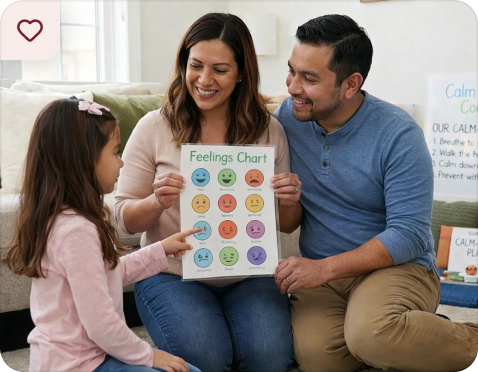
We look beneath the surface of behavior to the message it carries. With clear boundaries, calm responses, and emotional coaching, parents regain confidence and children learn self-regulation. We call this approach Name It, Hold It, Guide It: name the feeling, hold the boundary, and guide your child toward what to do instead.
Life on the Other Side
Practical strategies to navigate conflict; children who build resilience through guidance; parents who lead with calm authority; homes that echo with more laughter than shouting.
What You Will Gain (3-5 Sessions/long term)
- Practical tools to respond to challenging behavior with confidence
- Skills to nurture self-regulation and resilience
- Improved communication patterns in the family
- A calmer, more connected home environment
Frequently Asked Questions
How do I get my toddler to stop hitting or having tantrums?
Hitting and tantrums are usually a young child’s way of communicating a feeling they can’t yet put into words. We work on naming the emotion, holding a calm and consistent boundary, and teaching simple co-regulation tools — so the behavior eases as your child learns to manage big feelings.
What is co-regulation, and why does it matter?
Co-regulation is the way a calm adult helps a child settle their nervous system before expecting them to calm down alone. It’s the foundation of emotional regulation, and we practice it together, step by step.
Is this the same as therapy?
No. This is behavior and parenting consulting — practical, goal-focused guidance for everyday challenges. It isn’t psychological therapy or a substitute for clinical mental-health care.
How many sessions will we need?
Most families see meaningful change in a focused 3–5 session journey, with the option to continue for longer-term support.
Written by Sara Magen — Child & Parent Behavior Consultant with a psychology background, working with families in Miami and virtually nationwide. More about Sara →
Related reading
